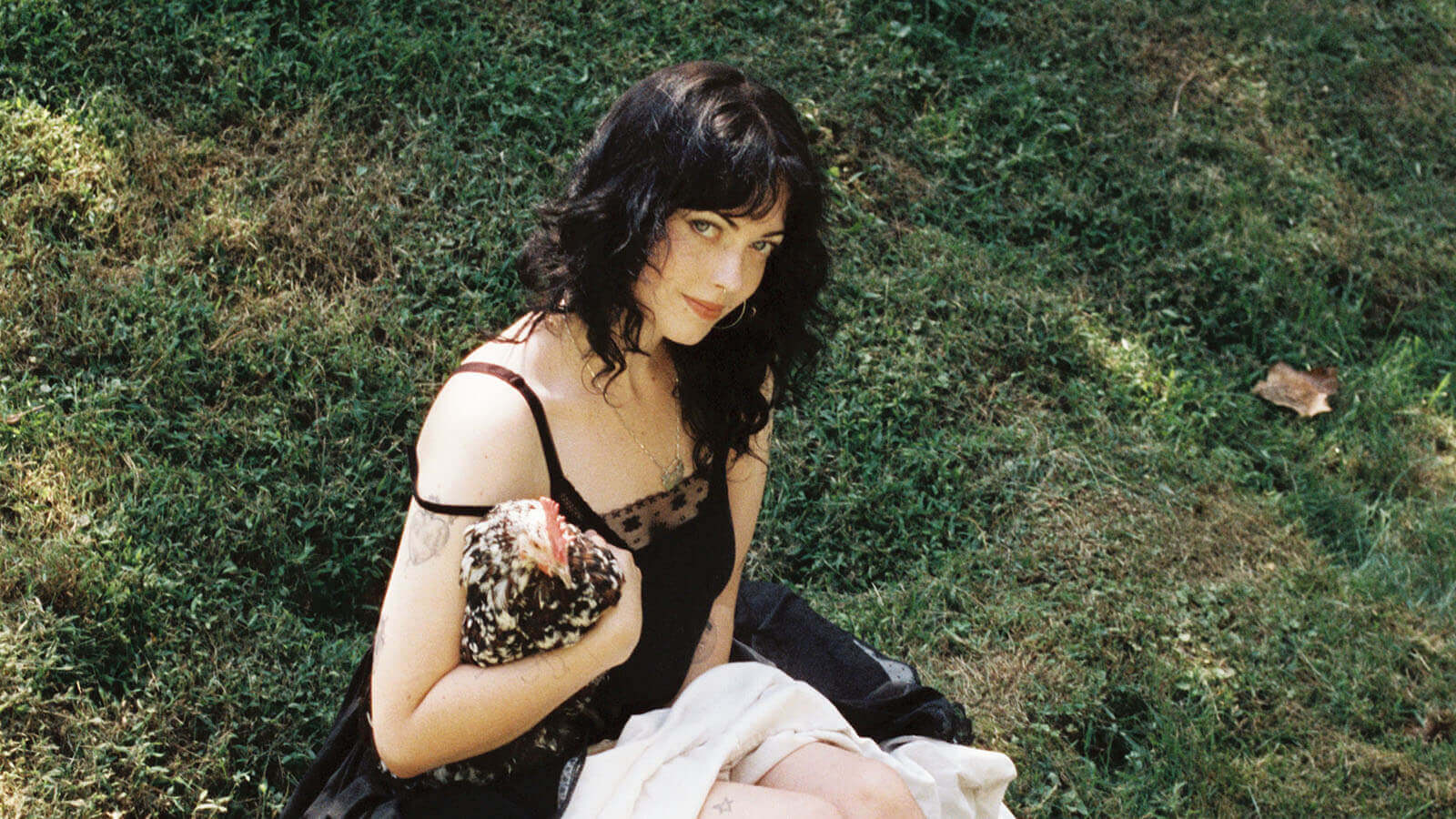

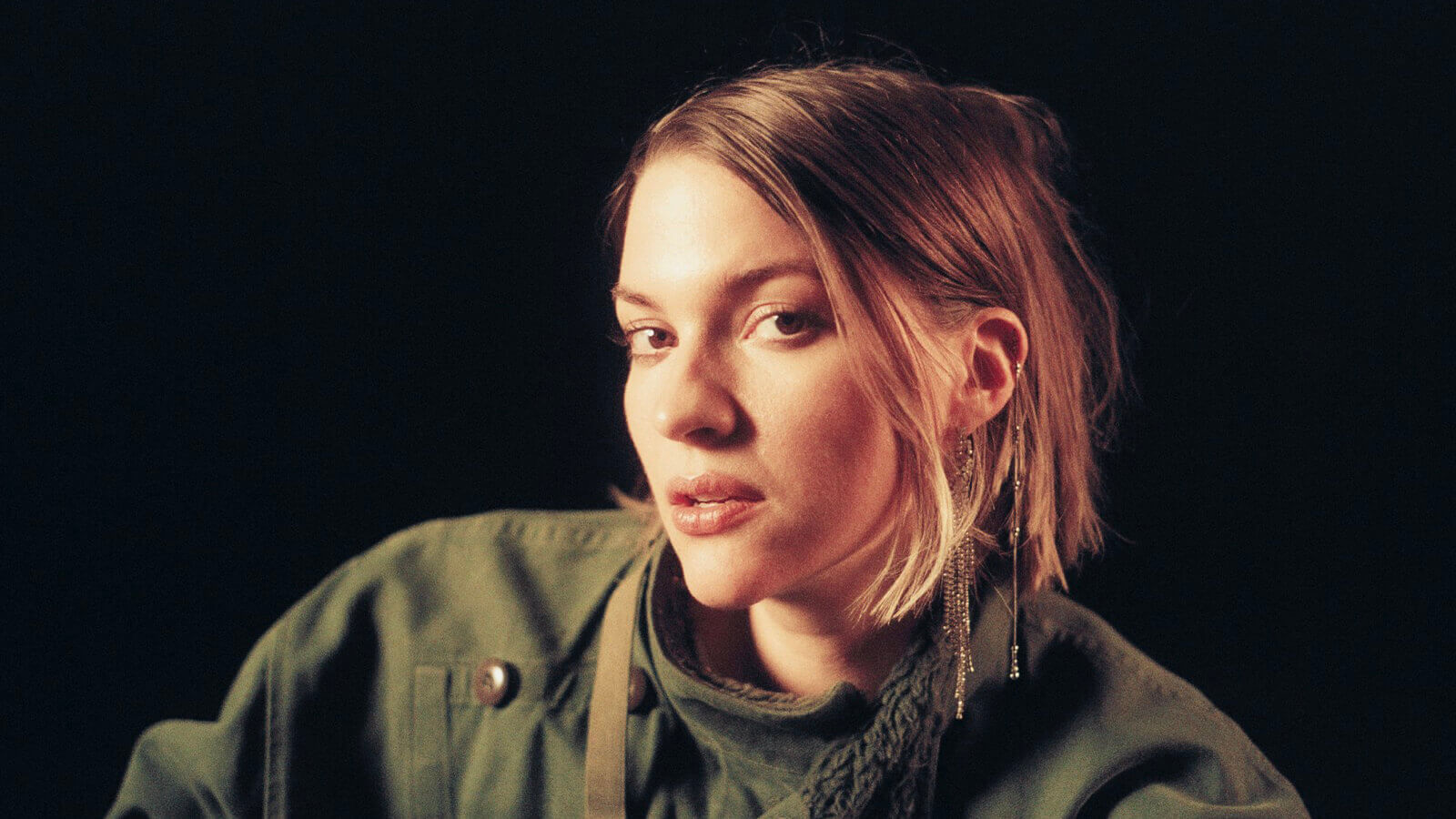
Four years after HARD, Tove Styrke returns with a new chapter – her upcoming album The Afterparty. We spoke about the single “Prayer” and why it became the album’s opening statement, the feeling that we’re living in the afterparty of our times, and the urgency to document the human experience before the world shifts again. Tove also reflects on motherhood, gardening, and the Stockholm studio sessions where she and Magnus Larsson, alongside close collaborators, shaped a cohesive sound – built without samples and driven by the pulse of a city just after sunset.
[Daman Paluszkiewicz] Since “Prayer” is described as “the only logical place to begin telling this story” — was it the first song written for the album, or did it become the opener later in the process?
[Tove Styrke] It came to be in the middle of the process. I knew that I wanted a strong opening track that fit the mood of a big city where the sun has just disappeared behind the horizon. I also knew that the record needed this type of beat somewhere, something with a lot of energy. As soon as we recorded it, I knew it was the perfect song to open The Afterparty.
[D.P.] In the album announcement you say that “we’re living in the afterparty phase of our time.” Could you expand on that idea and point to how this “afterparty” shows up — in emotions, in art, or maybe in real-world events?
[T.S.] The feeling that we’re living in the afterparty phase of our time came to me one day a few years ago. I think it’s a collective feeling many of us carry; that as a society we’ve moved into an era where it feels like we’ve already peaked, and that we’re on a steady journey toward an inevitable ending, or a rebirth (dawn in this story, the last track on the album).
There’s something acute about how many artists are creating right now, as if there’s a shared sense that we have to document the human experience now, before it’s too late.
[D.P.] “Prayer” is only the first preview of the new album. You say it “carries a sense of hope and anticipation.” What hopes and expectations are you carrying within you right now?
[T.S.] That all the dysfunction in the world will eventually backfire on itself, and allow people, and art, to be free.
[D.P.] It’s been almost four years since the album HARD was released — you became a mother, you got into gardening, and you co-produced the new material. How has all of that changed the way you work in the studio and make creative decisions?
[T.S.] Exploring other creative fields, like gardening and acting, gave me so much new energy, which fueled this project. Reconnecting with nature and becoming a mother has brought me closer to my inner child. I think a lot of creativity lives there.
As a society we’ve moved into an era where it feels like we’ve already peaked, and that we’re on a steady journey toward an inevitable ending, or a rebirth.
Tove Styrke
[D.P.] What emotions surprised you the most after becoming a mother — and do they already resonate in your music? If so, where do you hear them most clearly: in the lyrics, or in the sound?
[T.S.] The realization that I didn’t know everything already. I thought I had it all figured out, that I knew the landscape of my own feelings. It turns out I didn’t.
Everything now feels more vivid and more acute. At the same time, I care less about things that don’t directly concern my family. That has made me more fearless as an artist, and I think that’s been really good for the art.
[D.P.] Where did the decision to make music without samples come from — an aesthetic preference, the need for a more creative process, or the desire to set yourself a production challenge?
[T.S.] It was an idea that Magnus, my co-producer, brought up early on. He wanted us to try to create all the sounds using his synthesizers, and if that wasn’t possible, to record them in the room. I think it turned out to be one of the best creative decisions we made for the album. It gave us a strong framework to work within and kept the sound cohesive throughout the album.
[D.P.] You mention that in recent years you’ve taken up gardening. What brings you the most joy in it specifically — the ritual, the patience, watching things change? Has that kind of “garden attentiveness” carried over into how you made this music?
[T.S.] A few years ago it struck me very suddenly; the need to plant things in the ground and watch them grow. The realization that everything in nature works in perfect harmony, in circular systems, was mind-altering for me. Being in nature gives me a strong sense of purpose and belonging.
Being creative in areas other than music has felt like a healthy practice for me, it’s something that has expanded my creative thinking overall. This album would not sound the same, or explore the same themes, if I hadn’t reconnected with nature the way that I have.
[D.P.] Can you tell us about the place where you recorded The Afterparty — the city and the surroundings? Did you work in one studio or across multiple locations? How did that place (or places) shape the energy and atmosphere of the record?
[T.S.] The whole album was recorded in Stockholm. The studio is located in an industrial area south of the city, and we recorded pretty much everything there. I think the environment where you make music shapes the outcome much more than you might realize; the things you see outside the window, how it feels getting there from where you live every day, the acoustics outside the studio room where you try out melodies on the way to the bathroom, and so on.
[D.P.] How did you meet Magnus Larsson, Joel Kiviaho, and Linnéa Martinsson? How did you divide the roles in the studio, and was this your first time working together?
[T.S.] Magnus is a long-time friend of mine. He’s an electronic musician and producer and has released some really great music on his own. He and I started the musical journey of The Afterparty, and after a while we brought in Joel and Linnéa, both of whom have been invaluable to the project.
Linnéa became like an extension of my own brain when it came to fully realizing both the music and the lyrics. We share a lot of the same references and ways of thinking about the world and art, so it was incredibly valuable to bounce my impulses against hers and see what came out of that.
Joel has been amazing to have as a musician, songwriter, and energy in the room. The four of us really complement each other.
[D.P.] If you had to describe The Afterparty in one sentence — the one that best captures this chapter of your artistry — what would it be?
[T.S.] “And all of a sudden I got it – I’m here, with a plan and a gun to the sky.”
[D.P.] Do you feel that at this point in your artistic journey something in you has come to a close — and something else is only now opening up? If so, what is it?
[T.S.] Yes. I don’t know exactly what it is, but I can feel very strongly that this is the beginning of a new cycle for me.
[D.P.] What music do you listen to these days purely for yourself — not as an artist, but as a listener? What would you recommend to our readers right now?
[T.S.] These are some things I’ve been enjoying lately, and that I’d recommend to your readers:
- Live in San Francisco – Alex Cameron
- “Sit Around the Fire” – Jon Hopkins
- Uncut Gems (Original Motion Picture Soundtrack) – Oneohtrix Point Never
Thank you for taking the time to talk with us.
Interview by Damian Paluszkiewicz / Gazeta Muzyczna.